Yarn material pilot · ZEB-554
Actual yarn depth, plies and fibers
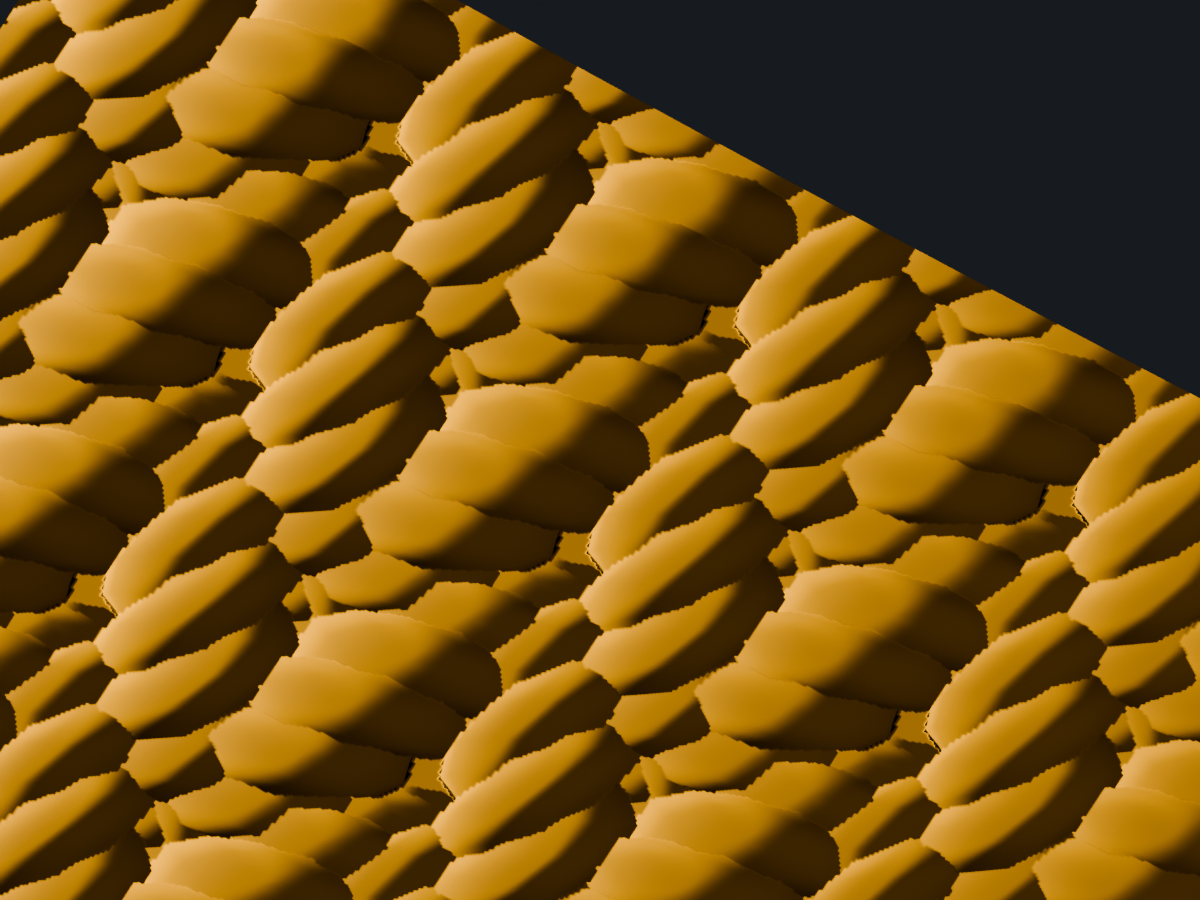
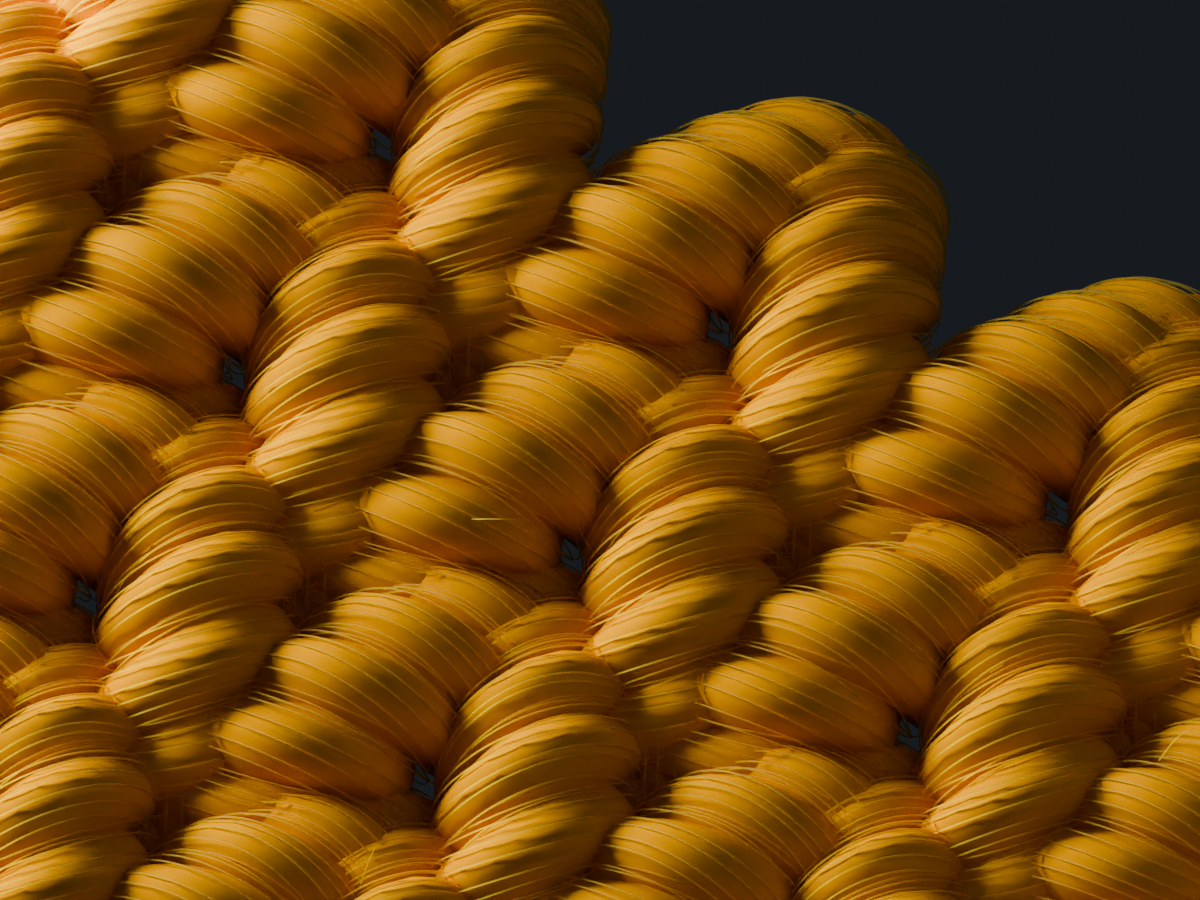
One small crochet swatch at Daisy’s gauge and yellow color. Compare the current baked runtime material with explicit three-ply geometry and fine fibers. Every pair uses the same camera, lights, resolution and exposure.
 New: plies + fiber scatteringCurrent baked material
Drag the divider. Look at the outer edge, shadowed gaps between strands, and the fine fibers catching grazing/back light. Open current at full resolution · Open new at full resolution
What actually changed
- Real relief: strands cast shadows on one another and create scalloped edges and openings. A normal map cannot reproduce those silhouettes.
- Actual three-ply geometry: the existing authored crochet paths are represented as twisted plies at higher sampling resolution.
- Fine fibers: native curve primitives follow the plies, with sparse, short flyaways. The pattern stays deterministic.
- Fiber optics: the final version uses Chiang scattering on fine fibers. Use the surface-shaded version above to isolate that optical change.
The current shared authoring system already contains plied stitches, but the game exporter replaces stitches and fuzz with a lighter baked material. This pilot restores explicit detail on a small swatch and adds the native fine-fiber/scattering comparison.
Wider view
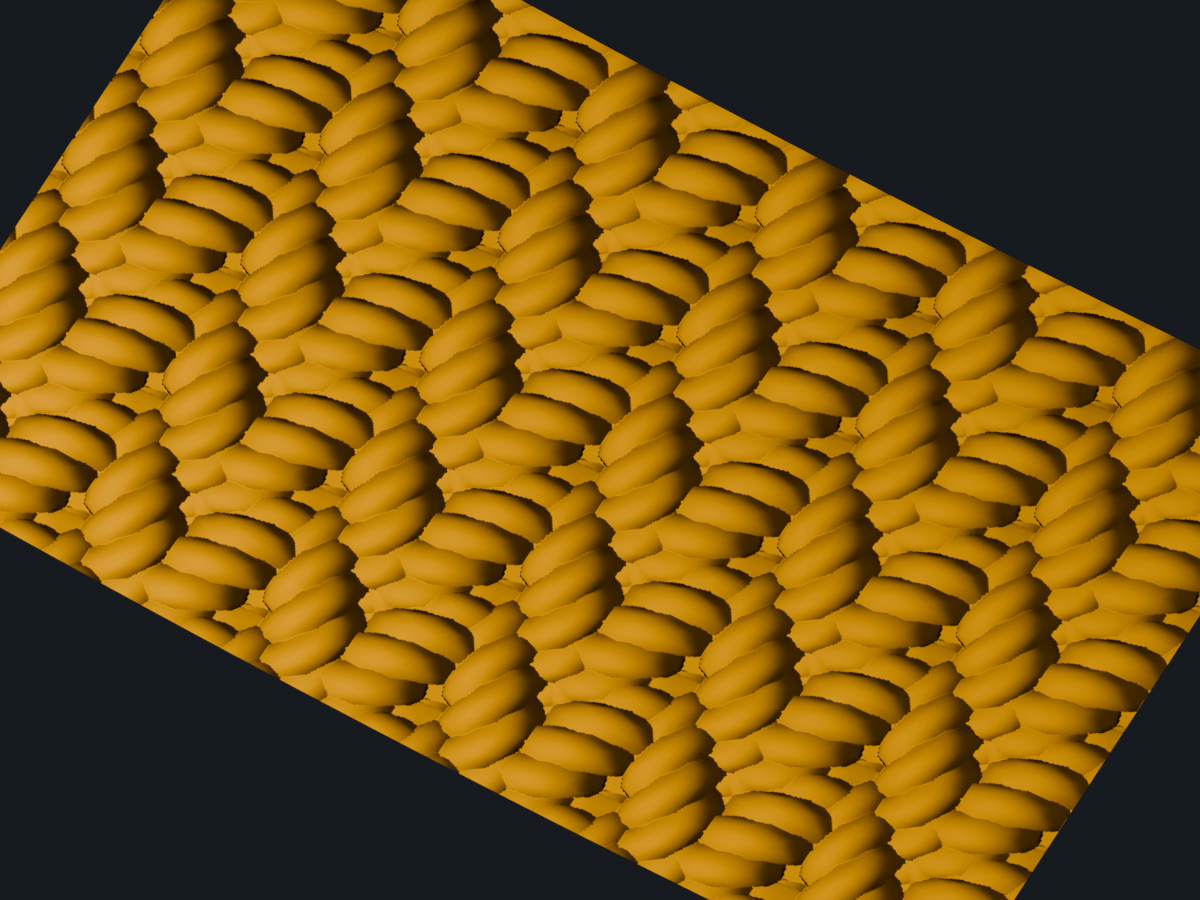
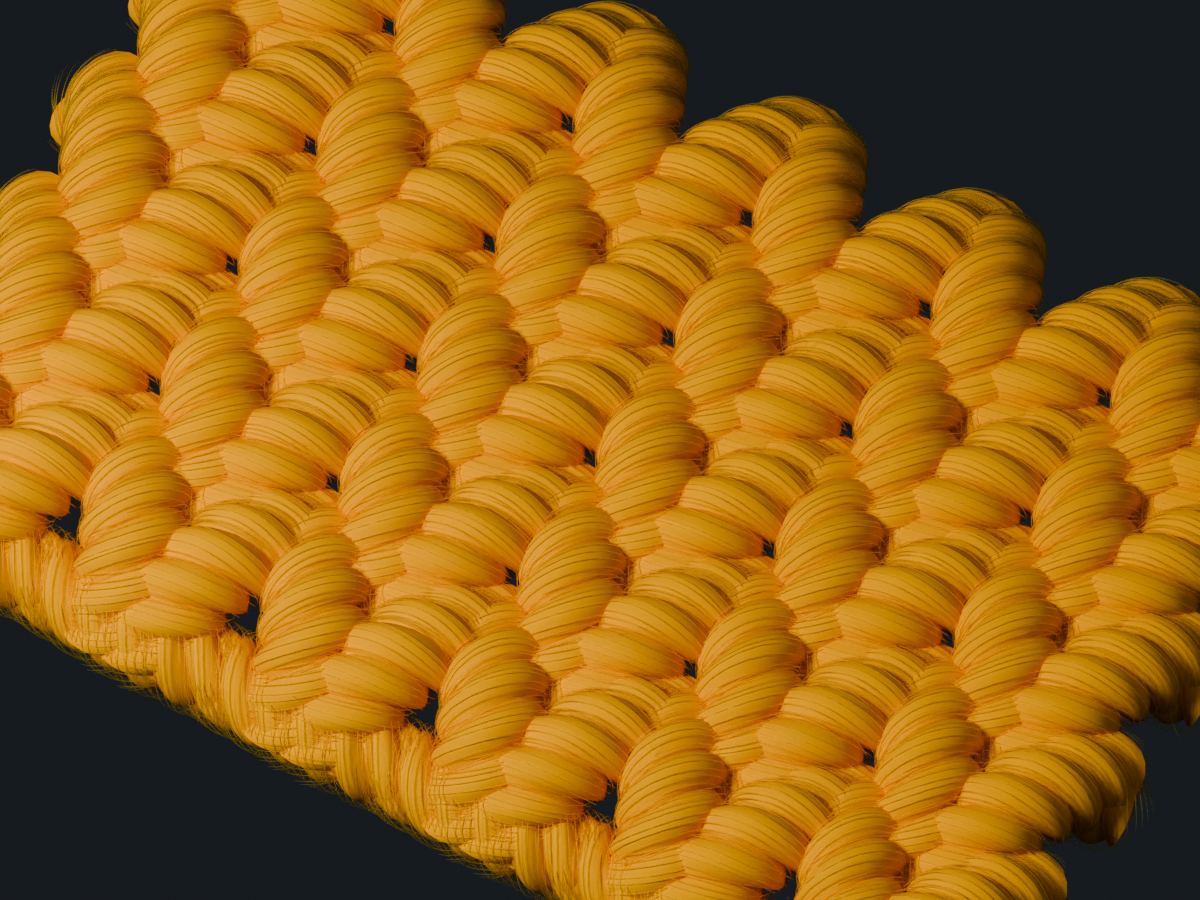
Current material on a smooth patch versus explicit plies and fibers, at a wider camera scale. The frame crops parts of the outer boundary. Same authored gauge and color; the explicit version has real gaps. This is a constructed material sample, not an extracted piece of Daisy’s dress.
Separate geometry, fibers and optics
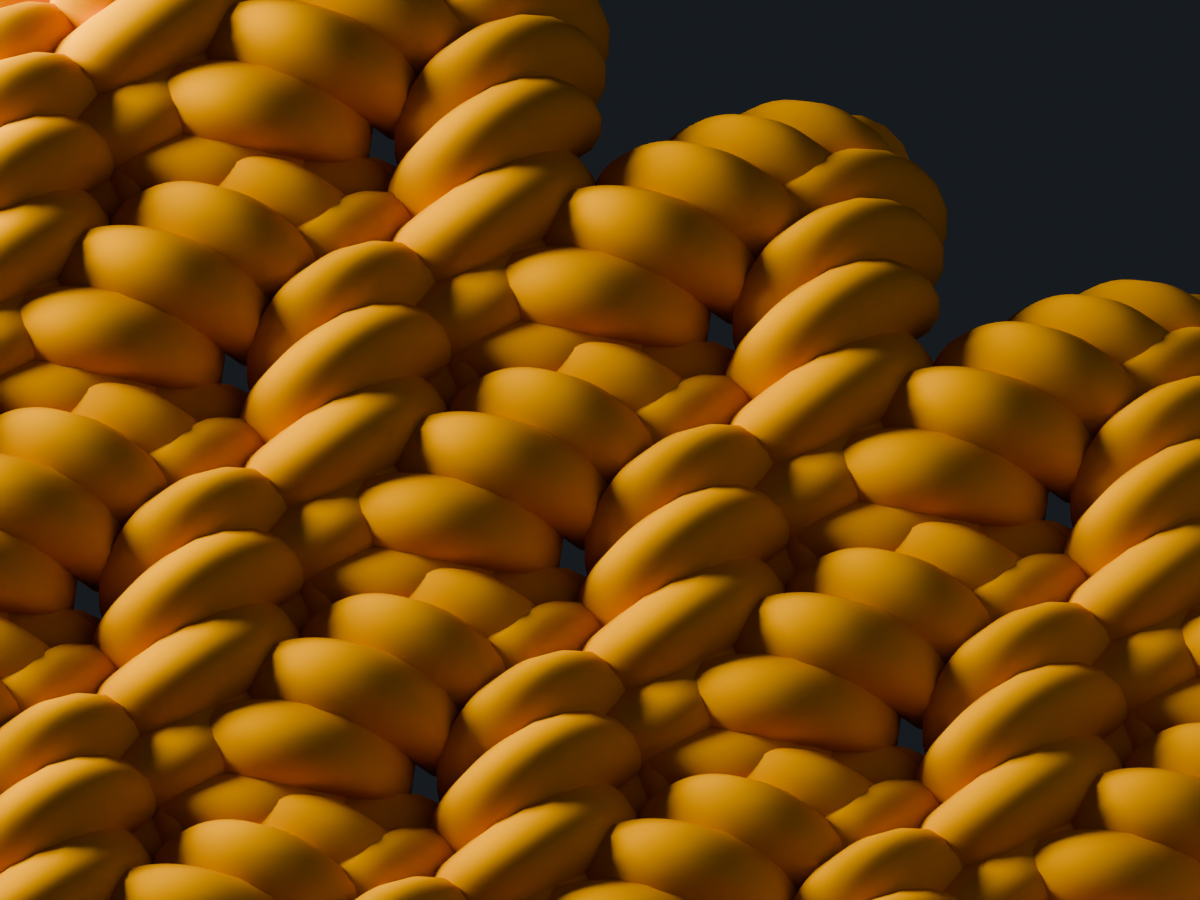
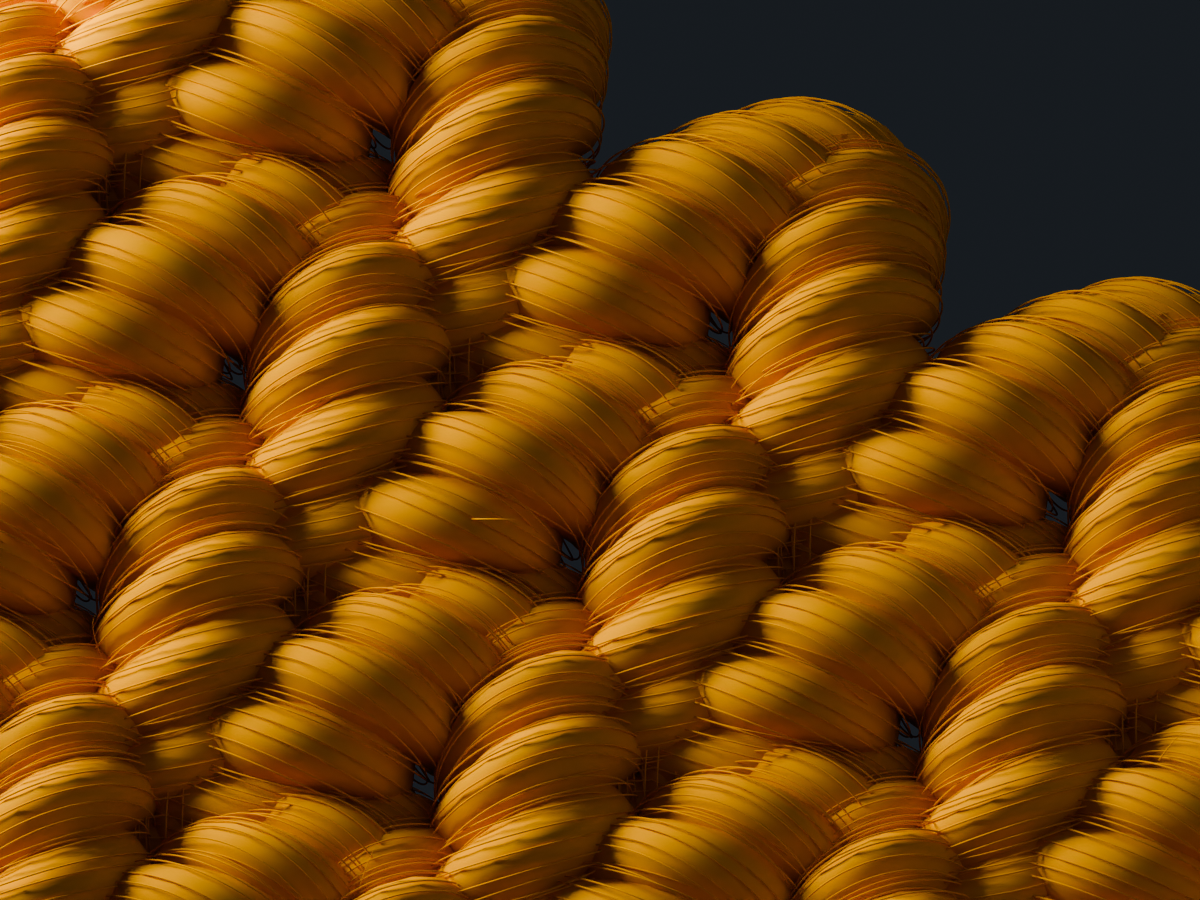
Bulk cotton parameters are held fixed. The no-fiber version isolates explicit relief; surface-shaded versus scattering fibers use identical fiber geometry and change its BSDF only. The baseline is an opaque surface, while explicit yarn has actual gaps—hole transmission is separate from scattering through fibers.
The cost
| Version | Geometry | Mean macro render time |
|---|---|---|
| Current baked material | 4,800 triangles | 40.4 s |
| Explicit plies | 645,120 triangles | 64.9 s |
| Fibers, surface shading | 645,120 triangles + 6,750 native fiber curves | 97.2 s |
| Fibers, scattering | 645,120 triangles + 6,750 native fiber curves | 110.0 s |
Pinned Blender 4.2.5, Cycles CPU, four threads, 1200×900, 64 samples. These are observed offline render costs, not browser frame times or target-device budgets. Fine curves are reported separately from triangles. This prototype does not replace production assets.
Evidence and limitations
Settings, timings, input and render hashes · Independent saved-file audit
The study reuses the existing stitch template, not a newly validated continuous-yarn reconstruction or mechanics solve. Fiber scattering is a hair-model transfer to cotton-colored fibers; no measured cotton fit or paper reproduction is claimed. The same authored color does not guarantee matched reflectance under different optical models. The editable .blend is packed and archived with the builder source.
Inspired by the literature on procedural yarn structure, measured micro-appearance and ply/fiber representations (P008, P017, P025 and P029 in the repository survey). This is an engineering pilot rather than their exact implementations.
Required claude.ai Artifact publishing remains unavailable here. This page is the actual HTML review surface, not that Artifact, and does not record creative approval.
Builder source: dfdd7e66ce51fbdb056785155ec94fe3271a0778 · GitHub: 9fe1697 · Tests: ✓ PASS · Verified: 2026-11-15 23:19:04 UTC · Cast: public